
Table of Contents
- Vineet Baheti
- 12 min Read
- No Comments
What Are the Types of Financial Planning? Your Ultimate Guide
Imagine you’re planning a road trip without a map—you might reach somewhere, but chances are you’ll waste time, fuel, and energy. That’s exactly what life feels like without financial planning.
From saving for your child’s education to buying your dream home or ensuring a stress-free retirement, different types of financial planning act like GPS routes guiding you toward each milestone.
In this guide, we’ll explore the key types of financial planning that help you turn money into a tool for living the life you’ve always envisioned.
Types of Financial Planning: Your Roadmap to Financial Success
Financial planning is essential for everyone, not just the wealthy it’s the foundation of a secure and fulfilling financial future. In today’s complex financial world, managing your finances proactively has never been more important.
This guide will walk you through the different types of financial planning and explain why each one is crucial in helping you reach your financial goals.
1. Definition of financial planning
Financial planning is all about creating a roadmap to your financial goals. By assessing your current financial situation, setting both short-term and long-term objectives, and developing strategies to manage income, expenses, and investments, you ensure you’re on the right path. With a solid plan in place, you can confidently move forward, knowing you’re making the most of your money. Partnering with an investment advisor can further enhance this process, providing expert guidance tailored to your needs.
A good financial plan covers:
- Expense control
- Wealth-building investments
- Tax planning
- Risk protection through insurance
- Retirement planning
- Estate and legacy transfer
Think of it as your money blueprint — guiding you to make informed choices and avoid costly mistakes.
Financial planning is not a one-time event but an ongoing process that requires regular review and adjustments as your circumstances and goals evolve. It’s about making informed decisions today to secure a better tomorrow.
2. Why Financial Planning Matters
The benefits of financial planning are vast and impactful. It gives you control over your financial life, helping you make decisions that align with your goals and dreams. Let’s explore some key reasons why financial planning is crucial for your success and peace of mind.
Optimises Returns While Reducing Tax Burden
Effective financial planning is all about strategically managing your investments to boost returns and reduce tax liabilities. By carefully selecting the right investment options and utilizing tax-efficient strategies, you can grow your wealth faster and smarter.
For instance, understanding the tax implications of various investments, such as mutual funds or fixed deposits, can significantly impact your net returns. Furthermore, incorporating tax planning as an integral part of your overall financial planning ensures you take advantage of all available deductions and exemptions.
Example: A ₹1.5 lakh investment in ELSS not only saves taxes under Section 80C but also builds long-term wealth.
Builds Clarity on Your Financial Position
Many individuals lack a clear understanding of their current financial standing. Financial planning helps you gain a comprehensive overview of your income, expenses, assets, and liabilities. This clarity is the foundation upon which sound financial decisions are built. By tracking your cash flow, you can identify areas where you can save more and allocate resources more efficiently. This detailed understanding empowers you to make informed choices about spending and saving.
Ensures Smart Money Management
Financial planning gives you the tools and strategies needed for smart money management. This involves budgeting, tracking expenses, managing debt, and making informed borrowing choices. With a clear budget in place, you can align your spending with your financial goals and avoid unnecessary debt, building a solid foundation for your financial future.
Tailored Investment Approach
A 25-year-old investor with high risk tolerance may choose equity funds, while a 50-year-old nearing retirement may prefer fixed-income instruments. Customization is key.
Helps You Set Priorities
Financial planning forces you to identify and prioritize your financial goals, whether it’s buying a home, funding your children’s education, or achieving retirement planning security. By clearly defining your objectives, you can allocate your resources effectively and stay focused on what truly matters to you.
Do you want to buy a home first or build your retirement fund? Planning allows you to align spending and saving with your goals.
Improves Chances of Reaching Financial Targets
Having a well-defined financial plan significantly increases your chances of achieving your financial targets. By breaking down your long-term goals into smaller, manageable steps, you can track your progress and make necessary adjustments along the way. Regular reviews of your plan ensure you stay on course and adapt to any unexpected challenges.
Shields You from Unexpected Crises
Life is full of surprises, and some of them can have significant financial implications. Financial planning includes building an emergency fund and obtaining adequate insurance coverage to protect you and your family from unforeseen events such as job loss, medical emergencies, or property damage. Having a financial safety net provides peace of mind and prevents you from derailing your long-term financial goals.
Provides Mental & Financial Comfort
Perhaps one of the most significant benefits of financial planning is the peace of mind it provides. Knowing that you have a plan in place to manage your finances and work towards your goals can reduce stress and anxiety about your financial future. This mental comfort can positively impact other areas of your life, allowing you to focus on your well-being and personal growth.
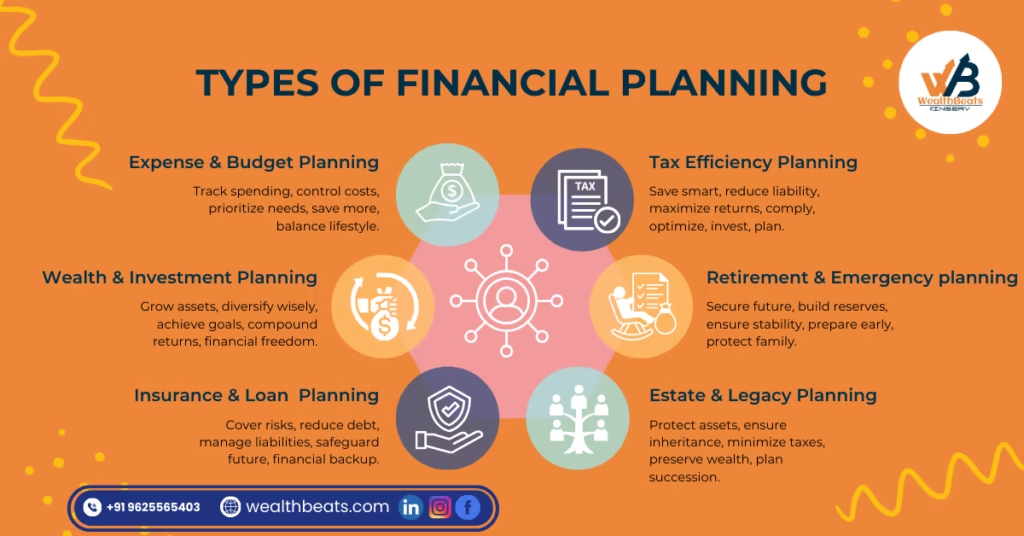
3. Various Types of Financial Planning
Financial planning covers a wide range of interconnected areas, each focusing on a crucial aspect of your financial life.
Understanding these different types of financial planning is key to creating a well-rounded and effective strategy that ensures long-term success.
By exploring all the categories of financial planning, you can take control of your finances and work towards your goals with confidence.
Expense & Budget Control
This foundational category involves tracking your income and expenses, creating a budget, and identifying areas where you can save money. Effective expense and budget control is crucial for managing your cash flow and ensuring you have sufficient funds to meet your financial obligations and achieve your savings goals.
What it includes:
- Tracking income and expenses
- Identifying unnecessary spending
- Allocating fixed percentages to savings and investments
Example: Following the 50-30-20 rule: 50% for essentials, 30% for wants, 20% for savings.
Why it matters: Budgeting prevents overspending and ensures money flows toward long-term goals.
Loan & Credit Management
Managing debt effectively is a critical component of financial planning. This category includes strategies for reducing high-interest debt, making informed decisions about borrowing, and maintaining a healthy credit score. Proper loan and credit management can save you significant amounts of money in interest payments and improve your overall financial health.
Debt is useful when managed, but dangerous when ignored.
What it includes:
- Paying off high-interest loans first
- Maintaining a good credit score (above 750)
- Avoiding unnecessary credit card debt
Example: Clearing a 14% personal loan saves more money than earning 7% interest in a fixed deposit.
Why it matters: Proper debt management frees income for investments and builds financial security.
Emergency Fund Preparation
Are you prepared for life’s unexpected financial challenges? Building an emergency fund is a crucial step in securing your financial future. By setting aside three to six months’ worth of living expenses, you ensure you’re ready for any surprise expenses without compromising your long-term goals. Start today by creating your emergency fund—your financial safety net for peace of mind and security.
Emergencies like medical issues or job loss can happen anytime.
What it includes:
- Setting aside 6–12 months of expenses
- Storing funds in liquid accounts or liquid mutual funds
Example: A family with ₹50,000 monthly expenses should maintain an emergency fund of ₹3–6 lakh.
Why it matters: It prevents dipping into retirement funds or taking high-interest loans during crises.
Wealth & Investment Strategy
Strategic investing is key to growing your wealth. It starts with understanding your risk tolerance, setting clear investment goals, diversifying your portfolio, and regularly monitoring performance.
Collaborating with an investment advisor ensures a personalized strategy that aligns with your financial objectives, helping you reach your goals efficiently.
What it includes:
- Defining goals (education, home, retirement)
- Diversifying across equities, bonds, gold, real estate
- Reviewing portfolio annually
Example: A 30-year-old investing ₹15,000/month in mutual funds via SIP could build over ₹3 crore in 30 years (at 12% returns).
Why it matters: Investments create wealth and help achieve big financial goals.
Protection through Insurance
Insurance plays a vital role in protecting your financial well-being and assets from unforeseen events.
This category of financial planning includes assessing your insurance needs and obtaining appropriate coverage, such as life insurance, health insurance, property insurance, and disability insurance.
What it includes:
- Life insurance (term plans)
- Health insurance (individual or family floater)
- Vehicle, property, and critical illness covers
Example: A ₹1 crore term plan may cost as little as ₹800/month but secures your family’s future.
Why it matters: Without insurance, one emergency can derail your entire plan.
Tax Efficiency Planning
Tax planning is a crucial part of financial planning that helps reduce your tax liabilities using legal and ethical strategies.
By leveraging tax laws, deductions, credits, and making tax-efficient investments, you can keep more of your income and significantly boost your financial growth.
Paying taxes is inevitable, but overpaying is avoidable.
What it includes:
- Deductions under Sections 80C, 80D, HRA
- Tax-saving investments like ELSS, NPS, and PPF
- Structuring salary components efficiently
Example: Combining ELSS, health insurance premiums, and NPS investments can save ₹60,000+ in taxes annually.
Why it matters: Tax planning increases disposable income and accelerates wealth building.
Retirement Readiness
Retirement planning is a long-term process that involves saving and investing to ensure you have sufficient funds to maintain your desired lifestyle after you stop working.
This category includes estimating your retirement needs, determining your savings rate, and choosing appropriate retirement planning vehicles.
Retirement is the longest holiday of your life — but it requires early preparation.
What it includes:
- Estimating retirement expenses
- Building a retirement corpus via PPF, NPS, pension funds, or mutual funds
- Considering healthcare inflation
Example: A 35-year-old who invests ₹10,000/month in NPS can accumulate ₹3 crore+ by age 60.
Why it matters: Retirement planning ensures you don’t depend on others financially in old age.
Estate & Legacy Structuring
Estate planning involves making arrangements for the management and distribution of your assets after your death. This includes creating a will, setting up trusts, and planning for potential estate taxes. Proper estate and legacy structuring ensures that your wishes are fulfilled and your loved ones are provided for.
Legacy planning ensures wealth transfer happens smoothly.
What it includes:
- Writing a will
- Setting up trusts
- Assigning nominees in financial products
Example: Parents creating a trust for their child ensures smooth inheritance without disputes.
Why it matters: Estate planning avoids family conflicts and secures dependents’ futures.
4. Practical Tips for Successful Financial Planning
Implementing successful financial planning doesn’t have to be overwhelming. Here are some practical tips to get you started:
- Set Clear and Achievable Goals: Define your short-term, medium-term, and long-term financial objectives. Make them specific, measurable, achievable, relevant, and time-bound (SMART).
You can’t build savings or investments if you consistently spend more than you earn. With online shopping, tempting discounts, and lifestyle upgrades becoming so accessible, it’s easier than ever to overspend without even realizing it.
The key is to consciously monitor your spending habits and ensure your expenses stay within your income.
- Track Your Income and Expenses: Understand where your money is coming from and where it’s going. Use budgeting apps, spreadsheets, or traditional methods to monitor your cash flow.
- Create a Realistic Budget: Develop a budget that aligns with your financial goals and allows you to save and invest while still meeting your essential needs and some discretionary spending.
A good way to understand your financial position is by calculating your net worth.
This is the difference between your assets — such as savings, investments, property, and cash — and your liabilities, like loans and credit card dues.
Tracking this over time gives you a clear picture of how your wealth is growing.
- Prioritize Saving and Investing: Make saving and investing a regular habit. Automate your savings to ensure consistency.
One simple method to manage money is the 50/30/20 rule, where 50% of your earnings go toward essentials like rent, groceries, and utilities, 30% is reserved for lifestyle and leisure, and the remaining 20% is saved or invested.
You can tweak the percentages based on your situation, but the idea is to always maintain a structure that ensures consistent savings.
Finally, financial planning is never a one-time task. Your goals, income, and circumstances will change over time, so your plan should change with them.
Reviewing it at least once a year allows you to adjust strategies, rebalance investments, and ensure you remain on track to meet your long-term objectives.
- Manage Debt Wisely: Avoid unnecessary debt and develop a plan to pay off high-interest debts as quickly as possible.
Debt should be approached carefully. High-interest loans, especially credit card debt, can quickly spiral out of control and damage your financial plan.
Borrow only when it’s absolutely necessary and only as much as you can repay comfortably. While some debt, like a home loan or education loan, can be beneficial, unnecessary borrowing should be avoided.
- Build an Emergency Fund: Aim to save at least three to six months’ worth of living expenses in an easily accessible emergency fund.
When setting financial goals, make sure they follow the SMART framework — Specific, Measurable, Achievable, Relevant, and Time-bound.
For example, instead of vaguely deciding to “save money,” a SMART goal would be saving ₹5,000 every month for a year to build an emergency fund.
Savings should always come first, not last. Instead of saving whatever is left after expenses, get into the habit of setting aside a fixed portion of your income immediately when you get paid. Think of it as paying your future self before spending on today’s wants.
Financial emergencies can happen anytime, from sudden job loss to unexpected medical expenses. Having an emergency fund equal to at least six months of living costs ensures stability and prevents you from liquidating long-term investments or taking on high-interest debt.
- Review and Adjust Regularly: Your financial plan is not set in stone. Review it at least once a year or whenever there are significant changes in your life circumstances.
Discipline is the foundation of wealth creation. This means following your budget, avoiding impulse purchases, and investing regularly, even when tempted to skip a month. Staying consistent makes a bigger difference than chasing quick gains.
As your income increases, your savings and investments should also grow. An effective way to do this is through Step-up SIPs, where you gradually increase your monthly investments each year. This approach not only helps you keep up with inflation but also accelerates wealth creation over time.
- Seek Professional Advice When Needed: Don’t hesitate to consult a qualified investment advisor or financial planner for personalized guidance.
Estate planning is another aspect people often overlook, but it’s critical if you want your wealth to be transferred smoothly to your loved ones. Preparing a will or setting up a trust ensures that your assets are distributed as per your wishes, while minimizing taxes, disputes, and legal complications.
Planning for retirement should not be delayed, even if you are in your 20s. Starting early gives your money more time to benefit from compounding, which makes it easier to reach your retirement goals. An early start also provides flexibility — whether you want to retire early or simply live more comfortably later in life.
5. Final Thoughts
Engaging in the different types of financial planning is not just about managing money; it’s about building a secure and fulfilling future. By understanding your financial situation, setting clear goals, and implementing effective strategies, you can take control of your financial life and work towards achieving your dreams. Whether it’s optimizing your investments through the guidance of an investment advisor, ensuring a comfortable retirement through diligent retirement planning, or minimizing your tax burden with strategic tax planning, each aspect of financial planning contributes to your overall financial well-being. Start your financial planning journey today with our financial planning services and pave the way for a brighter tomorrow.
People are Frequently Asked Us
The main types of financial planning include expense and budget control, loan and credit management, emergency fund preparation, wealth and investment strategy, protection through insurance, tax planning, retirement planning, and estate and legacy structuring. These categories cover the key aspects of managing and growing your finances.
- Investment Planning
- Retirement Planning
- Goal Planning
- Debt Management
- Tax Planning
- Emergency Planning
- Legacy/ Estate Planning
- Insurance Planning
You should revisit your financial strategy at least once a year. Additionally, it’s crucial to review and adjust your plan whenever there are significant life changes, such as a new job, marriage, the birth of a child, or a major financial event. Regular reviews ensure your plan remains aligned with your current circumstances and goals.
Common mistakes to avoid include not setting clear goals, neglecting to track expenses, ignoring debt, failing to build an emergency fund, not saving and investing consistently, being overly risk-averse or taking on too much risk, and neglecting to review and update your plan regularly.
You should avoid these financial planning mistakes:
- Not setting up an emergency fund.
- Not sticking to a realistic budget and spending more than you can afford.
- Believing that only rich people need professional advice.
- Putting off investing for the future.
- Not getting insurance.
- Investing without a plan or ignoring your goals and risk levels.
- Not spreading out your investments to reduce risk.
- Forgetting to review your financial plan regularly.
- Thinking you’re too young to start planning for retirement.
- Overlooking how taxes affect your investments.
- Spending first and saving later.
- Taking on too much debt.
Paying taxes is something we must do every year. If you try to avoid or skip paying taxes, you could face serious problems with the Income Tax Department. Everyone wants to keep as much of their hard-earned money as possible, and that’s where tax planning comes in. It helps you follow the law while reducing how much tax you owe. The money you save on taxes can then be used for investments, bringing you closer to achieving your financial goals faster.
People May Also Like


Contact Us

Vineet Baheti, CFP
With over 14 years of experience in wealth management, I am expertise in comprehensive financial planning, including tax planning, retirement planning, and goal-based planning for High-Net-Worth (HNI) and Ultra-High-Net-Worth (UHNI) clients. As a Certified Financial Planner (CFP, Certification Number: IN94288), I provide personalized strategies to help clients achieve financial security, optimize their tax positions, and plan for a prosperous retirement. My approach is centered around building tailored financial plans that align with individual’s unique goals, ensuring their long-term financial success.