
Table of Contents
- Vineet Baheti
- 5 min Read
- No Comments
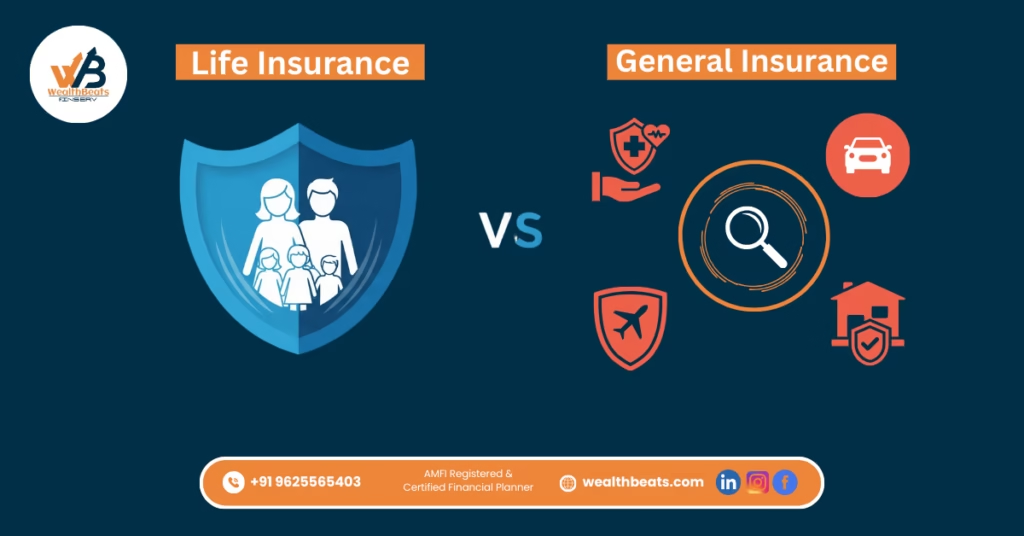
What are the major key differences between Life Insurance and General Insurance?
When it comes to managing money wisely, one thing many people overlook is financial risk. Life is unpredictable — a sudden medical emergency, damage to your home or car, or even a loss of income can create financial stress that’s hard to handle. That’s where insurance steps in as a safety net. Think of it as a shield that protects you from unexpected blows, ensuring you don’t have to drain your savings or put your financial goals on hold.
Insurance plays a vital role in financial planning because it helps you manage risks that are beyond your control. Instead of worrying about “what if something goes wrong?”, insurance allows you to plan ahead with peace of mind. Whether it’s covering hospital bills, repairing property damage, or securing your family’s future, the right insurance ensures stability even in uncertain times.
Broadly, insurance can be divided into two main categories: Life Insurance and General Insurance. While both are designed to provide financial protection, they serve very different purposes. Life insurance focuses on securing your family’s financial future in case of death or survival benefits, whereas general insurance covers day-to-day risks such as health, property, travel, and motor-related losses.
In this blog, we’ll break down their meaning, explore the common types of each, and highlight the major key differences life insurance and general insurance — all in simple, easy-to-understand terms.
Major Key Differences Between Life Insurance and General Insurance
Understanding the Major Key Differences Between Life Insurance and General Insurance helps you choose wisely. Both protect finances, but their purpose, coverage, and benefits are entirely different.
Parameters | Life Insurance | General Insurance |
Cover | Life insurance Provides coverage in case of death of the insured. | General insurance Covers non-life assets like home, health, travel, and vehicles. |
Compensation | Predetermined sum assured paid to beneficiaries if insured dies; some plans also pay maturity benefits if policyholder survives. | Compensation depends on actual loss or damage to health or assets; usually reimbursement. |
Premium | Life insurance Depends on age, health, and lifestyle. Premium remains fixed during the payment period. | GeneralUsually lower than life insurance. For health insurance, factors include age, lifestyle, medical history, and occupation. |
Premium Payment Term | Life insurance amount Can be paid monthly, quarterly, semi-annually, annually, or as a lump sum. | General Insurance amount Generally paid annually. |
Tenure | In Life Long-term; can extend for decades. Whole life plans last up to 99 years. | In General insurance Short-term; most policies need annual renewal. |
Repayment Amount | Payment of Life insurance Paid as sum assured/death benefit, maturity benefit, or fund-based return (ULIPs). | Payment of General Insurance Based on assessed damage or loss, then compensated accordingly. |
Beneficiary | Life insurance Nominees are usually dependents or loved ones, but anyone can be nominated. | General insurance The policyholder is typically the beneficiary. |
In short, knowing the Major Key Differences Between Life Insurance and General Insurance ensures you make smart decisions for long-term security and short-term protection against unexpected risks.
The core difference between Life Insurance and General Insurance is that Life Insurance secures your family’s future with a payout after death, while General Insurance protects against specific risks like health, car, or home damages.
There are various types of life insurance policies, such as:
1. Term Life Insurance
This is the simplest and most affordable type of life insurance. It provides coverage for a fixed period, and if the policyholder passes away during this time, the family receives the payout.
2. Whole Life Insurance
As the name suggests, this policy covers you for your entire life. It not only offers a death benefit but also builds cash value over time, which you can use if needed.
3. Endowment Plans
These plans provide both protection and savings. If the policyholder dies during the term, the family gets the sum assured. If the policyholder survives, they receive a maturity benefit at the end of the term.
4. Unit Linked Insurance Plans (ULIPs)
ULIPs combine insurance with investment. Part of your premium goes towards life cover, while the other part is invested in funds like equity or debt, giving you a chance to grow your money.
Understanding General Insurance
General insurance policies are meant to protect you from unexpected financial losses that can happen in everyday life. Unlike life insurance, which focuses on providing support after death, general insurance covers things like hospital bills, car accidents, travel mishaps, or even damage to your home. When such events occur, the insurance company either reimburses you for the loss or directly pays the expenses, so you don’t have to bear the full financial burden yourself.
To keep these policies active, you need to pay premiums, usually once a year. The cost of the premium depends on the type of coverage you choose and factors like your age, lifestyle, medical history, or even the value of your assets (such as a car or house). Since these are short-term plans, they need to be renewed regularly. Having general insurance ensures you’re financially prepared for sudden expenses, giving you peace of mind and protecting your savings.
Common Types of General Insurance
1. Health Insurance
Health insurance is one of the most popular types of general insurance. It helps cover the cost of medical treatments, hospital stays, doctor consultations, and surgeries. Depending on the plan, it may also cover pre- and post-hospitalization expenses, medicines, and even preventive health check-ups. With rising healthcare costs, having health insurance ensures you can access quality treatment without worrying about draining your savings.
Example: If you’re hospitalized for an appendix surgery costing ₹2,00,000, your health insurance will pay the bill, saving your savings.
2. Motor Insurance
Motor insurance protects your car or two-wheeler from accidents, theft, and damages. It also covers third-party liabilities. There are two types: Third-Party and Comprehensive.
Example: If your car hits another vehicle, motor insurance covers the repair costs for the other person’s car as well as your own (if you have comprehensive cover).
3. Travel Insurance
Travel insurance is designed to safeguard you from unexpected issues during domestic or international trips. It provides coverage for medical emergencies abroad, trip cancellations, lost luggage, or flight delays. Some policies even cover passport loss or emergency evacuations. Having travel insurance means you can enjoy your trip with peace of mind, knowing you’re protected against sudden expenses.
example: If you fall sick during a holiday in Europe and the hospital bill is ₹5,00,000, your travel insurance will cover it, sparing you from huge out-of-pocket expenses.
4. Home Insurance
Home insurance offers protection for your house and the valuables inside it. It covers risks such as fire, burglary, natural disasters (like floods or earthquakes), and even man-made damages. Depending on the policy, it can cover the building structure, household items, or both. This ensures your biggest asset — your home — stays financially protected in case of unexpected damage or loss.
Example: If a fire damages your kitchen and furniture, home insurance pays for repairs and replacements, reducing financial stress.
5. Commercial Insurance
Commercial insurance is designed for businesses. It covers property damage, theft, legal liabilities, employee risks, and even income loss due to disruptions.
Example: If a factory’s machinery worth ₹50,00,000 gets damaged in a fire, commercial insurance ensures the business doesn’t collapse under the loss.
Conclusion
The Major Key Differences Between Life Insurance and General Insurance lie in their purpose and benefits. Life Insurance secures your family’s future, while General Insurance protects your assets and lifestyle from day-to-day risks. Having both ensures a well-rounded financial safety net.
FAQs on Life Insurance vs. General Insurance
In life insurance and general insurance, Neither is better than the other — they serve different purposes. Life Insurance secures your family’s future, while General Insurance protects you from day-to-day risks and financial losses.
Yes, ideally. Life Insurance provides long-term financial security, and General Insurance covers short-term risks like health emergencies, accidents, or property damage. Life insurance and General Insurance together offer complete protection.
Life Insurance premiums are higher because they cover long-term risks and may also provide maturity benefits. General Insurance covers short-term risks, so premiums are usually lower.
The best time is as early as possible. Younger and healthier individuals pay much lower premiums and enjoy affordable long-term coverage compared to those who start later in life.
Major Key difference between Life Insurance and Genral Insurance is that – General insurance provides protection against financial losses from unforeseen events like accidents, health issues, or property damage. It includes health insurance, motor insurance, travel insurance, and home insurance.
Personal insurance, on the other hand, is a broader term that covers both life insurance (for death or survival benefits) and general insurance (for non-life risks). In short, personal insurance protects individuals, while general insurance focuses on specific non-life assets or events.
There’s no difference between general insurance and non-life insurance — they are the same. Both refer to insurance policies that do not cover life but instead protect against financial losses due to risks like accidents, theft, fire, or medical emergencies. Examples include motor insurance, health insurance, and property insurance.
Term insurance is a type of life insurance that provides financial protection to your family in case of your untimely death during the policy term. It focuses on life coverage and offers death benefits.
General insurance, however, covers non-life assets such as your car, home, or health. It offers compensation for financial losses arising from accidents, illnesses, or damages — not death.
General insurance is also known as non-life insurance. It covers everything other than human life, such as vehicles, homes, travel, and health. Policies like motor insurance, fire insurance, health insurance, and marine insurance all fall under the umbrella of general insurance.
People May Also Like

Contact Us

Vineet Baheti, CFP
With over 14 years of experience in wealth management, I am expertise in comprehensive financial planning, including tax planning, retirement planning, and goal-based planning for High-Net-Worth (HNI) and Ultra-High-Net-Worth (UHNI) clients. As a Certified Financial Planner (CFP, Certification Number: IN94288), I provide personalized strategies to help clients achieve financial security, optimize their tax positions, and plan for a prosperous retirement. My approach is centered around building tailored financial plans that align with individual’s unique goals, ensuring their long-term financial success.