
Table of Contents
- Vineet Baheti
- 5 min Read
- No Comments
GST Reforms 2025: new GST Rate Slabs of the 5% & 18% Detailed Breakdown
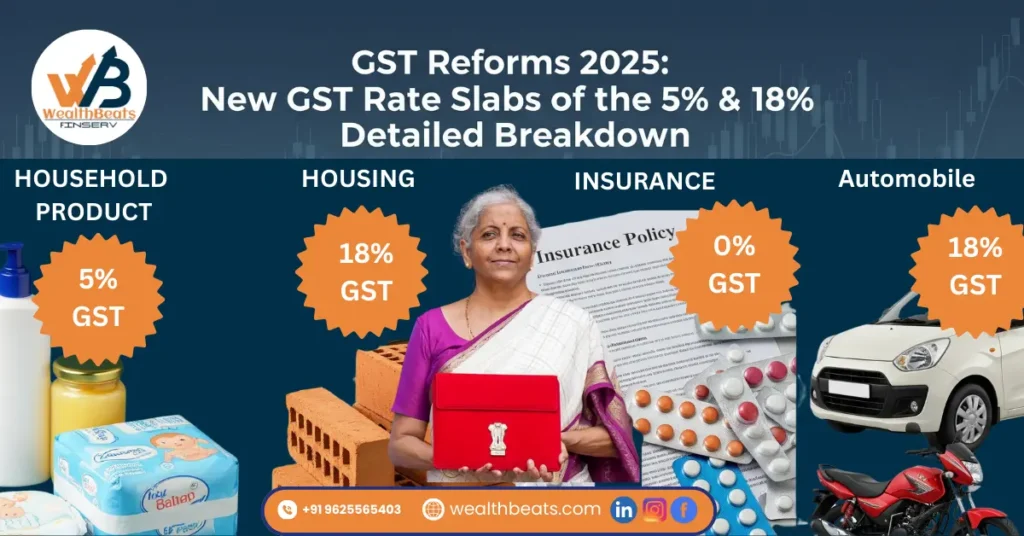
The 56th GST Council meeting has introduced one of the most significant GST reforms since the Goods and Services Tax was rolled out in 2017. Finance Minister Nirmala Sitharaman unveiled a major overhaul of the tax system, reducing the earlier four-tier structure of 5%, 12%, 18%, and 28% into a much simpler two-rate system — 5% (Merit Rate) and 18% (Standard Rate). Additionally, a special 40% slab will continue to apply to sin and luxury goods.
This landmark change, effective from September 22, 2025 (Navratri’s first day), aims to streamline compliance, stimulate consumption, and bring relief to households as well as businesses.
In this guide, we’ll break down everything you need to know about the new GST rate — what becomes cheaper, what remains costlier, and how this GST reform impacts different industries.
Key Highlights of GST Reform 2025
- Two-Slab GST Structure: Existing four slabs merged into 5% and 18%.
- Special 40% Slab: Continues for luxury and sin goods like pan masala, tobacco, SUVs, yachts, and private jets.
- Household Savings: Toiletries, packaged food, bicycles, dairy, and plant-based milk now under lower slabs.
- Healthcare Relief: No GST on life and health insurance premiums.
- Boost to Housing Sector: Cement and construction materials shift from 28% to 18%.
- Clarity in Automobiles: Uniform 18% GST on auto parts, small cars, two-wheelers (≤ 350cc), and 3-wheelers.
- Agriculture Support: Machinery, irrigation tools, and bio-pesticides now taxed at 5%.
GST Rate Changes – Before vs After
Here’s a clear comparison of how the new GST rate differs from the old structure:
Category / Item | Old GST Rate | New GST Rate |
UHT Milk, Paneer, Roti, Paratha | 5% | Nil (0%) |
Plant-Based & Soya Milk Drinks | 12% / 18% | 5% |
Hair Oil, Shampoo, Soap, Toothpaste | 18% | 5% |
Butter, Ghee, Chocolates, Sauces | 12% / 18% | 5% |
Baby Diapers, Feeding Bottles | 12% | 5% |
TVs, ACs, Dishwashers, Monitors | 28% | 18% |
Small Cars (≤ 1200cc petrol / ≤ 1500cc diesel) | 28% | 18% |
Motorcycles ≤ 350cc, 3-Wheelers, Goods Carriers | 28% | 18% |
Mid/Large Cars & SUVs | 28% + Cess | 40% |
Cement & Construction Materials | 28% | 18% |
Life & Health Insurance (Individual) | 18% | Nil (0%) |
Cancer & Chronic Disease Medicines | 5% / 12% | Nil (0%) |
Medical Devices & Diagnostic Kits | 12% / 18% | 5% |
Manmade Fibre & Yarn | 12% / 18% | 5% |
Salons, Gyms, Yoga Services | 18% | 5% (No ITC) |
Auto Parts | 28% | 18% |
Tractors & Agricultural Machinery | 12% / 18% | 5% |
Impact on Households
The GST reform brings major savings for families:
- Everyday products like shampoo, toothpaste, soaps, and namkeens now fall under the 5% new GST rate.
- Plant-based and dairy alternatives are cheaper, making healthier food more accessible.
- Baby essentials including diapers and bottles now carry just 5% GST.
- Insurance becomes more affordable with 0% GST on life and health policies.
This will boost disposable income, supporting higher consumption and savings.
Impact on Real Estate & Infrastructure
For automobiles, the new GST rate simplifies taxation:
- Small cars, two-wheelers, and 3-wheelers now at 18% (down from 28%).
- Auto parts uniformly taxed at 18% instead of 28%.
- Luxury cars and SUVs attract 40% GST without cess, making them more expensive.
This is expected to revive demand in mass-market vehicles while keeping luxury consumption in check.
Healthcare & Wellness Benefits
The government has focused heavily on healthcare in this GST reform:
- No GST on life-saving drugs and treatments for chronic illnesses.
- 5% GST on diagnostic kits, medical devices, and thermometers.
- Individual life and health insurance policies completely exempt from GST.
- Wellness services like salons, gyms, and yoga now fall under 5% GST (without ITC).
Sin & Luxury Goods – The 40% Slab
Certain items remain under high taxation to discourage overuse:
- Luxury SUVs, yachts, and private aircraft.
- Tobacco products, pan masala, gutkha.
- Aerated and energy drinks.
These continue to be taxed under the 40% slab, ensuring higher revenue and restricted consumption.
Impact on Businesses
The GST reform also benefits businesses:
- Easier compliance with only two main slabs.
- Fewer disputes due to clearer classification.
- Improved cash flow through smoother input credit management.
- Higher consumption expected to raise sales and revenues.
Revenue Secretary Arvind Shrivastava confirmed that the new GST rate structure is sustainable and will strengthen compliance and tax buoyancy.
Effective Date
The new GST rate takes effect from September 22, 2025 (Navratri). Businesses don’t need to cancel existing e-way bills for goods already in transit — they remain valid under their original rules.
✨ This GST reform is one of the most impactful tax overhauls in recent years, aiming to simplify the system, cut costs for households, and create a business-friendly environment, all while maintaining higher taxation on luxury and sin goods.
Final Thoughts on New GST Rate
The new GST rate changes of 2025 represent a landmark move toward a simpler and more consumer-focused tax system. By lowering taxes on daily essentials, health insurance, and housing materials, this GST reform is designed to leave more money in the hands of citizens and stimulate domestic consumption.
For both individuals and businesses, this is an ideal opportunity to reassess financial plans, explore tax-saving avenues, and channel the additional savings into smart investments.
At Fincart, we guide you in leveraging such policy shifts — helping you ensure that every rupee works harder and smarter for your future.
FAQs on New GST Rate Cuts 2025
The GST Council has simplified the structure into two key slabs — 5% (Merit Rate) and 18% (Standard Rate). A 40% rate remains for luxury and sin goods such as SUVs, pan masala, tobacco, and soft drinks.
The revised new GST rate will come into effect on September 22, 2025 (Navratri).
Basic food items like UHT milk, paneer, roti, chapati, paratha, as well as maps, charts, exercise books, and certain life-saving medicines are now GST-free. In addition, all individual life and health insurance policies are completely exempt.
Plant-based milk and soya milk drinks will be taxed at 5%.
Tobacco, gutkha, and pan masala will remain under the current slab plus cess until pending cess-related loans are cleared, after which they will fall under a 40% GST on retail price.
No. Existing e-way bills will continue to be valid until their scheduled expiry.
Services such as salons, gyms, yoga, and wellness sessions will now attract 5% GST (without ITC), making them cheaper.
Yes. With zero GST on individual health and life insurance policies, policyholders will see lower premiums.
Yes. Their GST rate has been reduced to 5%, making these everyday food items more affordable.
Cement and other construction materials will now be taxed at 18% instead of 28%, reducing property construction costs and making housing more accessible.
All auto parts now attract 18% GST. Small cars, motorcycles (up to 350cc), and goods transport vehicles have also moved down to 18% from the earlier 28%.
Yes. With only two primary slabs, the GST reform reduces classification disputes, simplifies filings, and improves transparency in taxation.
People May Also Like
PMS vs Mutual Fund: Key Differences and Which Is Better in 2025

How to Choose the Right Financial Planner in India (2025 Guide)
EPF vs NPS: Which is Better for Retirement Planning in India 2025?

Vineet Baheti, CFP
With over 14 years of experience in wealth management, I am expertise in comprehensive financial planning, including tax planning, retirement planning, and goal-based planning for High-Net-Worth (HNI) and Ultra-High-Net-Worth (UHNI) clients. As a Certified Financial Planner (CFP, Certification Number: IN94288), I provide personalized strategies to help clients achieve financial security, optimize their tax positions, and plan for a prosperous retirement. My approach is centered around building tailored financial plans that align with individual’s unique goals, ensuring their long-term financial success.